 Login
LoginStavros - Knightsbridge tutor
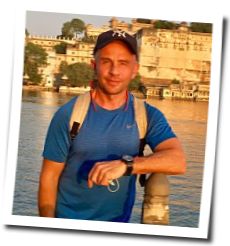
Information About Stavros:
Personal Description:
I work as a Science and Engineering Tutor at Kaplan International College London at London Bridge.
Apart from that, I am a fully Qualified Secondary School Teacher (Science). Over the last 10 years, I have been involved in Private Tuition in the areas of Mathematics and Physics for Exam/College Preparation as well as University Level Courses. I have experience in the UK (GCSE & A-Levels), the International Baccalaureate curriculum in Physics (SL/HL) and Mathematics (SL/HL), the Australian (Year11 & 12) School System as well as Oxbridge Admission tests (PAT/STEP). Furthermore, I have worked as an Academic Researcher (Theoretical Particle Physics).
Professional Experience
I am a full-time Private Tutor in Mathematics and Physics. A large part of my work is related to University Level tuition but also the last two grades of High School (exam preparation).
From my placements in UK and Australia, I have extensive experience and knowledge in teaching 1st and 2nd-year Physics courses, such as Classical Mechanics, Classical Electrodynamics, Thermodynamics, Calculus, Statistics as well as more advanced 3rd and 4th-year subjects, such as Quantum Mechanics, Quantum Field Theory, Optics & Lasers, Particle Physics, Special and General Relativity, etc.
Moreover, I have taught various topics in University Level mathematics, such as Calculus, Advanced/Multivariable Calculus, Algebra, Complex Analysis, Group Theory, Differential Geometry, Differential Equations, Mathematical Physics, etc.
Furthermore, I have experience in the UK schooling system and currently work with a number of London based tutoring offices, teaching Physics and Mathematics for GCSE/iGCSE and A-Levels (AQA, CCEA, OCR, WJEC ).
I also have experience in GRE Subject Tests (Physics and Mathematics) preparation as well as SAT and GMAT (Math/Quantitative/Analytic sections)
Tutoring Approach
My tutoring teaching methods are highly personalized and are based on result-oriented techniques that help students overcome learning barriers. An initial assessment/evaluation and subsequently a tuition plan is made. Given that feedback is essential, I continuously communicate with the student and her/his family in order to adjust and improve the teaching experience.
More independent students will come up with their own questions and a list of topics from the syllabus that need help with. This is the best way that tutoring works. More challenged students will require a scaffolding and specific lesson structure e.g. full syllabus teaching along with homework, assessments, etc.
As seen from my CV, I have completed a Diploma in Education (DipEd, UNSW 2012) and I am a fully Qualified Secondary School Teacher. I have experience in teaching both at one-to-one and at a class setting.
The rest of my education involves a Ph.D. in Theoretical High Energy Particle Physics (University of Oxford, 2002), a Bachelor's Degree in Physics (University of Ioannina 1998) and a Diploma in Business (Kent Institute of Business and Technology, 2012). I also have extensive experience in research (Theoretical Physics, 2001-2007).
Teaching Experience:
Qualifications:
Diploma in Education - Secondary Education - Science (DipEd, UNSW, Sydney Australia 2021)
Ph.D. in Theoretical Particle Physics (University of Oxford, 2002).
Bachelors Degree in Physics (University of Ioannina 1998)
Diploma in Business (Kent Institute of Business and Technology, 2012).
During my graduate school period, I had the chance to become familiar with the system of tutorials that some of the British universities offer. This much more personalized system provides the opportunity of the outside of the classroom discussion and interaction which are a crucial part of the learning process, so I believe in being available to the students outside of lectures in some kind of such a system. Many students who are reserved in class, ask excellent questions in smaller settings and thus, learn much more. I greatly value the instruction and mentorship I received while in college and feel strongly about providing quality education to current and future students.
Tutoring Approach:
I think that it is crucial to provide students with a working knowledge of physical systems and to teach them problem-solving skills for building upon this knowledge. Teaching a person to think analytically is at the core of what a student should take away from any science course. For students not majoring in physics, it is important to teach them how science affects their daily lives and how to make informed decisions about it based on information available. For physics majors, it is crucial to teach them the knowledge pertinent to their course of study and how scientists solve difficult problems using approximation, computational, and other quantitative methods. These important tools are invaluable to future researchers because they aid in the careful design of experiments and in determining the predictions of a model or theory. I would also strive to cover a range of topics in my courses. This would enable me to teach an array of different methods for approaching physical problems and to demonstrate how similar approaches can be applied to problems from disparate fields. Furthermore, being a theoretician, I am well suited to teach physics majors how to construct theories and models, to derive predictions from these models, and to test these predictions against empirical data they have collected from the literature or obtained in the laboratory. Mentoring the research of undergraduate and graduate students is one of the most long-lasting contributions a researcher can make, and it is a process that I find fun and rewarding. From my experience, I learned the importance of engaging students through examples and of pitching material at a level that assumes intelligence but not necessarily knowledge, blending the known with the unknown in a combination that gives the student the feeling of possibility rather than that of impossibility that formal and impressive methods may impose. I would also enjoy teaching introductory physics courses. Although it is often challenging to teach introductory students, it is a challenge I thoroughly enjoy. Preparing lectures and solution sets forces me to communicate fundamental ideas in simple terms and to think deeply again about some of the most basic principles in physics.
Subjects Taught:
- Maths
- Up to 11 years (primary) (£40 p.h.)
- 11+ (secondary) (£40 p.h.)
- GCSE or Standards (£40 p.h.)
- A-Level or Highers (£40 p.h.)
- Further/Higher (university) (£40 p.h.)
- Adult/Casual learner (£40 p.h.)
- Physics
- Up to 11 years (primary) (£40 p.h.)
- 11+ (secondary) (£40 p.h.)
- GCSE or Standards (£40 p.h.)
- A-Level or Highers (£40 p.h.)
- Further/Higher (university) (£40 p.h.)
- Adult/Casual learner (£40 p.h.)
Qualifications:
- Diploma in Education, University of New South Wales, Sydney, Australia 2011
- Phd Theoretical Particle Physics, Oxford University, UK
- BA in Physics , University of Ioannina, Greece
- Diploma in Business, Kent Institute of Business and Technology, 2012
Further Information:
| Availability: | Weekends / Weekdays (all times) |
| Types of Tutoring: | Travels to you / From their home / Online |
| References Supplied? | Yes |
| Current DBS/CRB Check? | Yes |
| Additional Languages Spoken: | Greek, Greek |


