 Login
LoginDuncan - Wimborne tutor
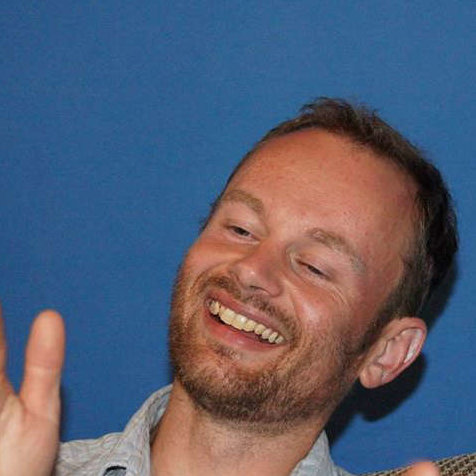
Information About Duncan:
Personal Description:
I am the author of "Improve Your Maths in Two Hours". Which at least proves I have enough ideas about maths to write a book! Actually I think the most important thing about me is that I have been a maths (and science) tutor for over 10 years. I have never taught in school meaning I have developed the habits appropriate to teaching one-on-one and not to a group; I feel the two situations are very different.
In general, my teaching style is to focus on technique. I train my students to look at a question in an exam (because realistically exam performance is the most important thing for most people) and simply think "What can I see? What can I write down?" And if you simply write down relevant equations and values things usually work out after a bit of algebra.
What I do not do is ask you to memorise "the method" for a given type of question.
Instead a good example of my teaching technique is how I teach solving equations. I do not teach linear and quadratic equations separately; Instead I have a five step process that will solve any almost equation (up to roughly the end of A-Level). There is the occasional exception that can appear in the hardest questions but I can teach you them as well (these exceptions generally revolve around manipulation of indices or coefficients).
To give you more of a feeling for who I am: I have PhD in applied physics (from an environmental sciences department) and a degree in physics. I achieved the top grades ever at my school for A-Levels, gaining four straight A grades at a time when this was far more difficult; I actually gained over 100% in many mock exams at the school because the teachers would adjust the mark schemes so that students got a slight lift to their grades to reflect likely improvements before the exam (and in my case as I was doing so well it simply pushed me above 100%). After my PhD I went on to work as both as a civil service scientist and as a university researcher. Then I rapidly lost interest in research and discovered a love of teaching. I become a science and maths tutor in 2008 when I first learnt the art of tutoring the old-fashioned way with pen, paper and photocopies. Now I have a state-of-the-art computer setup, have my own subscription to a premium whiteboard service (which includes giving you continued access to what we did after the class), run an educational YouTube channel and have written a book containing my top tips for learning maths.
I'm aware that some will ask: Why is Duncan tutoring as he seems too highly qualified? The main reasons are: (1) I enjoy being self-employed and dislike research and data analysis. (2) I am very efficient, including having an organised whiteboard system, that saves me time and makes me profitable. (3) My income is supplemented by revenue from YouTube, book sales and so on. (4) I believe that continuing to do some active tutoring gives me a work balance whilst I spend the rest of my working day mainly writing.
Finally, note that this site charges a "finders fee"; I am very happy with this because the site helps me to advertise my tutorials which would otherwise cost me a lot of money to do. I would have to charge a higher hourly rate if this were not the case. However, if it bothers you I am happy to extend a discount to you to reflect what you have to pay so that you do not feel of pocket when we begin tutoring together.
Teaching Experience:
I am continually developing new resources for my students and continually developing my coaching skills. I am not a classroom teacher... instead I am a specialist one-to-one coach which requires very different skills.
I have experience of tutoring for A-level (including C1-4, M1-2, S1-2, etc), the International Baccalaureate, iGCSE, GCSE Higher, GCSE Foundation and entrance exams (such as for private schools, the 11+ and 13+).
Every student I have ever taught that has had a grade requirement for a course, a job or something else... has achieved or surpassed that grade. This might partly be luck, but I believe it says something about my tutoring and this has included situations where the student has genuinely surprised their teachers with the grade they achieve.
One of my students surprised their class by getting a good grade in the A-Level C1 exam (unlike the rest of the class) because the teacher had not prepared them for unusual questions (but I had done so with my student)... another student raised their grade from a U to a C at AS Level... another student went up two sets at school within less than 12 months... another student got an A* and made it to Cambridge... another student made it to Canford with a special recommendation in their acceptance letter for their maths performance in the entrance exam. I cannot guarantee this level of success but believe I offer the "unique, unfair advantage" that is typical of that offered by experienced and successful private maths tutors.
I am also happy to offer support for all science subjects up to GCSE level (and I can also offer Physics A-Level support to my regular students).
Tutoring Approach:
My approach is three-fold...
First, I aim to work on basic skills; These are the foundation of success in mathematics. If you know how to do a really complicated question in A-Level Maths you can lose most of the points if you accidently rearrange the equation incorrectly at the start.
Second, I aim to work on topic-specific skills. I have customised worksheets (written by me) that include fake exam questions for most topics. For example, I have my own questions for many topics that are not based on questions in past papers... it is not unusual for one of my unusual questions to then be a "surprise question" in an exam that then gives my students an advantage. I believe that the ability to anticipate future likely exam questions is a key skill for someone trying to be a top maths tutor.
Third, I will coach each individual student to better use their own natural ability. This may mean boosting their confidence. However, it often (bizarrely) means lowering their confidence in their first answer (hence increasing their understanding of how real mathematicians think because you have to be cautious) so that they then better double-check their answers as they go through and lose less marks in the exam. (Note, this is why I praise technique and not answers because it creates a better "motivational framework" for the student.) I may also suggest memory tricks for key facts, although in general we look to become grounded in good maths technique so that memorisation becomes unnecessary.
Subjects Taught:
Qualifications:
- BSc in Physics
- PhD in Environmental Science
- A-Levels in Maths, Further Maths, Physics and Chemistry
- Maths Cup at School, Awards at College and University.
Further Information:
| Availability: | Weekends / Weekdays (all times) |
| Types of Tutoring: | Travels to you / Online |
| References Supplied? | Yes |
| Current DBS/CRB Check? | Yes |


